Peeling Skin on Feet: Causes and How to Treat It

Peeling Skin on Feet: Causes and How to Treat It

Peeling skin on feet is common, but the cause isn't always obvious. The right treatment depends entirely on what's causing it — and treating the wrong thing rarely works.

Dry skin, athlete's foot, sunburn, eczema, and psoriasis can all produce peeling on the feet, and they look surprisingly similar. This guide walks through the most likely causes, how to tell them apart, and what actually works for each one.

Why Do Feet Peel?

The skin on the soles and sides of the feet is thicker than almost anywhere else on the body, a protective adaptation to weight-bearing and friction. But that same thickness makes the feet more prone to dryness, cracking, and peeling when the skin's moisture balance is disrupted or when an infection takes hold.

Peeling itself is just the outer layer of skin (the stratum corneum) shedding. Every area of skin does this naturally through a process called desquamation, but it becomes visible and problematic when it happens too quickly, when large flakes detach, or when there's discomfort alongside it.

The key question is always: what's driving it?

Common Causes of Peeling Skin on Feet

1. Dry skin

The most common and most straightforward cause. The soles of the feet have no sebaceous (oil) glands, which means they can't self-lubricate. Without regular moisturising, the skin dries out, loses elasticity, and eventually begins to flake or peel. Dry skin on feet often worsens in winter, in heated indoor environments, and with age.

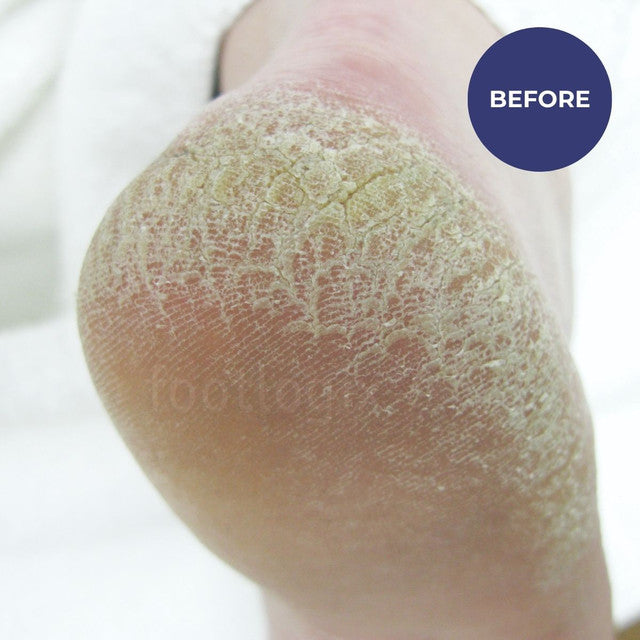
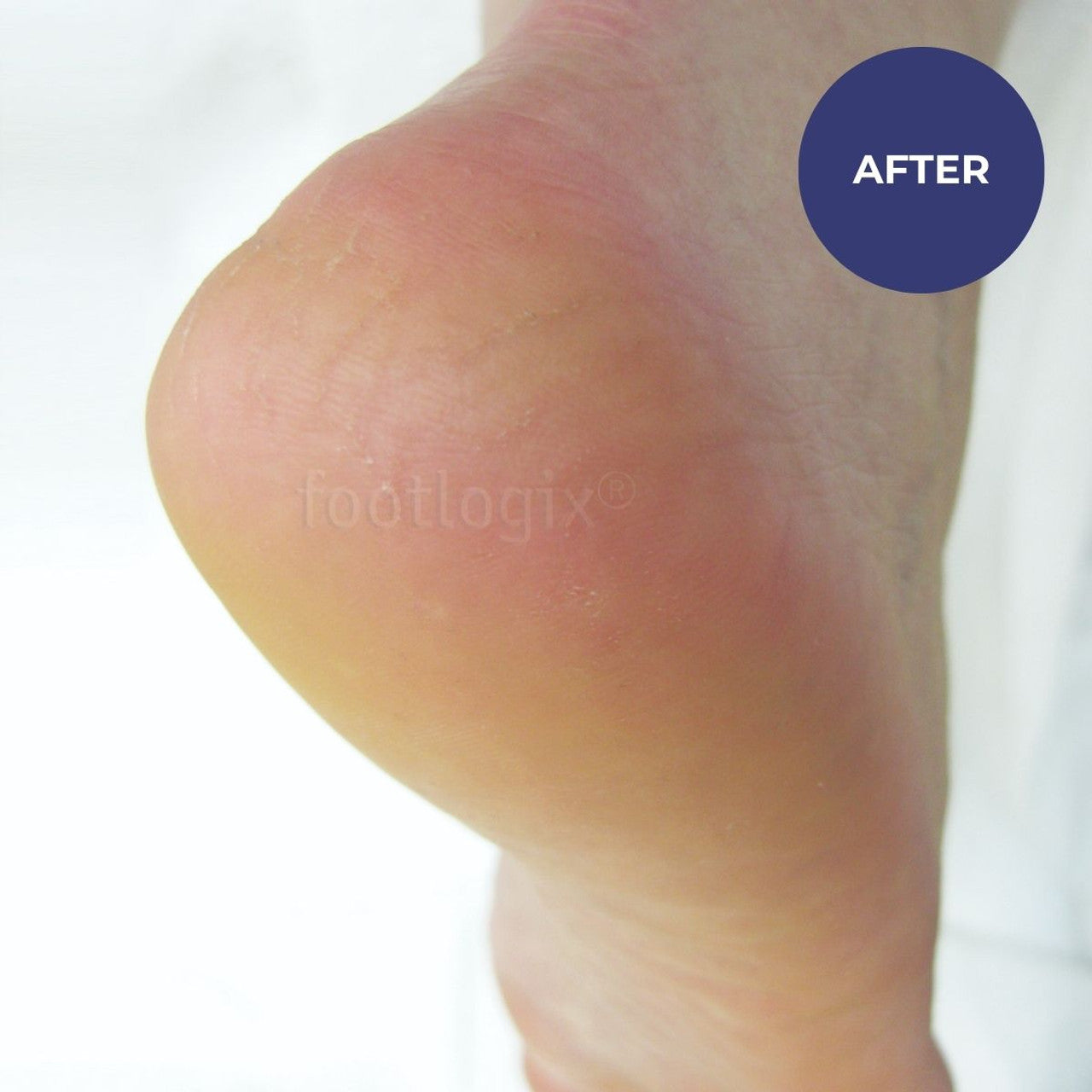
Dry skin peeling tends to be fine and powdery rather than in large sheets, and the affected skin is usually tight, rough, or itchy. There's no redness, blistering, or smell. It's most common on the heels and balls of the feet.

Treatment: A urea-based foot cream used twice daily is the most effective approach. Urea both rehydrates the skin and gently breaks down thickened layers, addressing both the dryness and the peeling at once.

2. Athlete's foot (tinea pedis)

Athlete's foot is a fungal infection that's a very frequent cause of peeling skin on feet, particularly between the toes and on the soles. It's highly contagious and easily picked up from communal areas like swimming pools, gym changing rooms, and shared showers. For a detailed look at how to identify and treat it, see our athlete's foot guide.

The peeling associated with athlete's foot is typically more pronounced than dry skin peeling, it often comes away in larger pieces, particularly between the toes, and is accompanied by other symptoms:

      Itching, sometimes intense

      Burning or stinging sensation

      Redness or inflammation between the toes or on the sole

      A slightly unpleasant odour

      In some cases, small fluid-filled blisters


Treatment: Athlete's foot needs an antifungal product, not a moisturiser. Treating it with cream alone won't resolve the infection. The Footlogix antifungal solutions collection includes options formulated to address fungal foot infections.

3. Contact dermatitis

Contact dermatitis is an inflammatory skin reaction triggered by contact with something that either irritates the skin directly or causes an allergic response. On the feet, common culprits include shoe materials (particularly rubber, leather dyes, or adhesives), sock fabrics, foot care products, and laundry detergents.

The resulting peeling is usually accompanied by redness, swelling, and significant itching. It tends to affect whichever part of the foot came into contact with the trigger — often the top of the foot or the sides where the shoe presses.

Treatment: Identifying and removing the trigger is the priority. Symptoms usually resolve once contact with the irritant stops. A mild topical corticosteroid (from a pharmacist or GP) can help with the inflammation. Avoid further contact with the suspected cause.

4. Sunburn

Sunburn on the feet — most commonly the tops of the feet and toes — causes the same peeling seen anywhere on the body after sun exposure: redness followed a few days later by peeling skin as the damaged outer layers shed.

It's often overlooked because people don't think to apply sunscreen to their feet. Wearing sandals, lying on the beach with feet exposed, or even sitting outside in summer can cause sunburn on the foot's dorsal surface.

Treatment: Once the sunburn has occurred, gentle moisturising with an aloe vera gel or fragrance-free lotion helps the peeling process along without causing further irritation. Avoid peeling the skin manually, which can cause infection. Prevention is straightforward: apply SPF to the tops of the feet.

5. Eczema (atopic dermatitis)

Eczema can affect the feet, particularly the soles. It produces dry, itchy, inflamed skin that may crack and peel. Foot eczema often appears alongside eczema elsewhere on the body, though it can occur in isolation.

It can be difficult to distinguish from athlete's foot on appearance alone — both cause peeling, redness, and itching. Key differences: eczema typically responds to moisturiser and steroid cream, while athlete's foot doesn't improve with moisturiser alone and requires antifungal treatment. If you're unsure, a GP or dermatologist can confirm.

Treatment: Emollient (moisturising) therapy is the foundation. Mild to moderate flares may require a topical corticosteroid. Identifying and avoiding triggers (certain fabrics, soaps, or stress) helps prevent recurrence.

6. Psoriasis

Psoriasis is an autoimmune condition that causes the skin to produce cells too rapidly, leading to a build-up of thickened, scaly skin that sheds. On the feet it can appear on the soles as well-defined patches of thickened, silvery-white scaly skin.

Psoriasis is a chronic condition and distinct from the other causes listed here — it requires medical management rather than over-the-counter treatment. If you have persistent, clearly demarcated patches of scaly skin on the soles that don't respond to moisturisers or antifungal treatments, see a GP.

7. Hyperhidrosis (excessive sweating)

Excessive sweating on the feet creates a persistently moist environment that softens and weakens the skin's outer layers, leading to maceration — a waterlogged state where the skin turns white and begins to peel or slough off. This is most common between the toes.

If the peeling is primarily between the toes, the skin looks white or soggy, and excessive sweating is a feature of the problem, hyperhidrosis is likely a contributing factor. A foot deodorant spray can help manage sweat levels and reduce maceration.

How to Tell What's Causing the Peeling

Because several conditions look similar, a few diagnostic questions help narrow it down:

      Is there itching? Significant itching points toward athlete's foot, eczema, or contact dermatitis. Dry skin causes mild itching at most.

      Where exactly is the peeling? Between the toes and on the soles suggests athlete's foot. Heels and balls of feet suggest dry skin. Top of the foot after sun exposure suggests sunburn. Clearly defined patches on the sole may indicate psoriasis.

      Is there redness or blistering? Dry skin doesn't produce these. Athlete's foot, eczema, contact dermatitis, and sunburn all can.

      Has it responded to moisturiser? If moisturising hasn't helped after two weeks of consistent use, there's likely an infection or inflammatory condition involved rather than simple dryness.

      Did it develop suddenly? A sudden onset, particularly after a new product, shoe, or sun exposure, points to contact dermatitis or sunburn. Slow-developing peeling is more consistent with dry skin or a fungal infection.

Treatment Options for Peeling Skin on Feet

For dry skin and general peeling

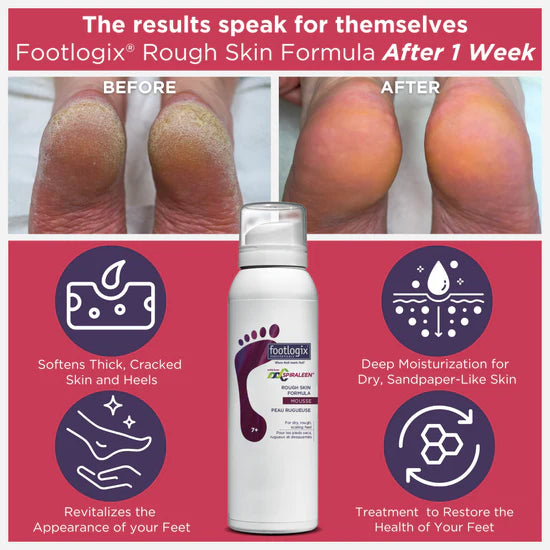
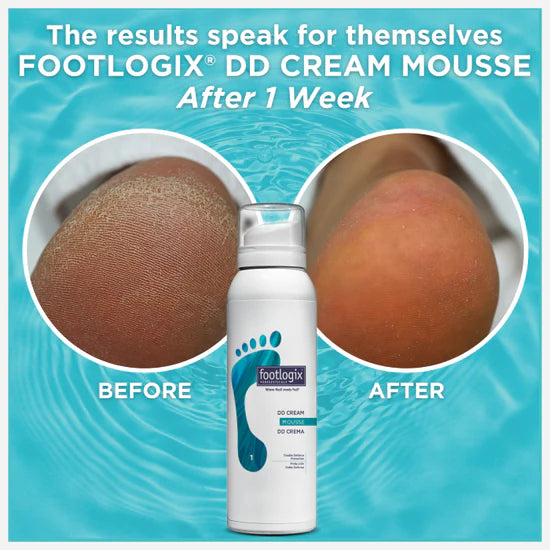
A urea-based foot cream or mousse applied twice daily is the most effective treatment for dryness-related peeling. For more pronounced hard or rough skin peeling, the Footlogix Peeling Skin Formula is formulated specifically for this purpose — it uses urea alongside other active ingredients to break down thickened, peeling skin and restore the moisture barrier.

For athlete's foot

An antifungal treatment is essential. Browse the Footlogix antifungal solutions range for options suitable for home use. Finish the full course of treatment even once symptoms improve — stopping early is the most common reason athlete's foot recurs.

For contact dermatitis

Remove the trigger, apply a fragrance-free emollient, and consult a pharmacist if symptoms are significant. Patch testing through a GP can identify the specific allergen if it's unclear.

For sunburn peeling

Gentle fragrance-free moisturiser or aloe vera gel. Don't pull the peeling skin — let it shed naturally.

For eczema or psoriasis

Prescription treatment from a GP or dermatologist is usually required for ongoing management. Over-the-counter emollients can help with symptom control between flares.

The Footlogix Peeling Skin Formula

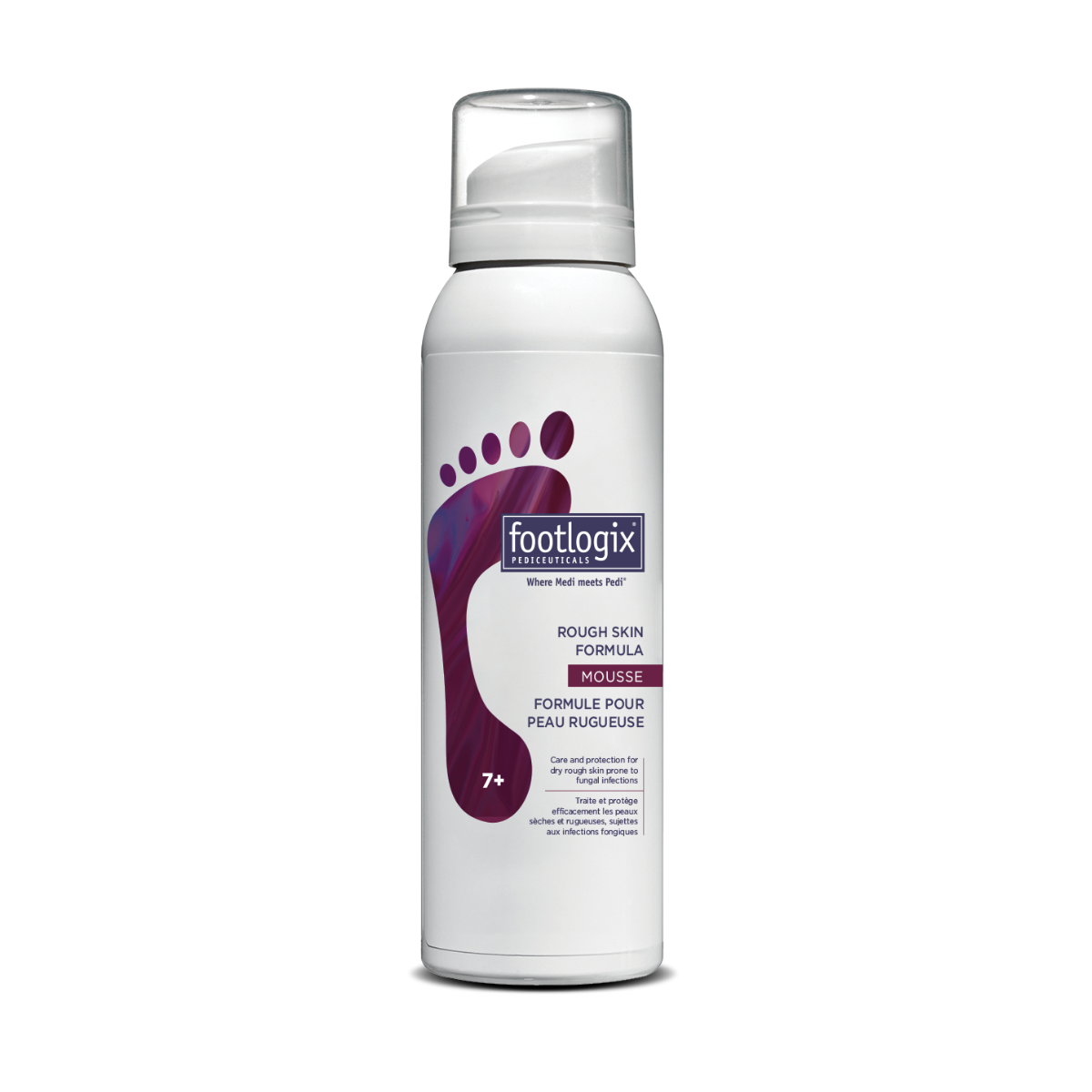
For peeling caused by dry or thickened skin, rather than infection or inflammation, the Footlogix Peeling Skin Formula is the most targeted option in the range. It's a Pediceutical® mousse formulation developed to address the specific mechanism behind skin peeling: a breakdown in the skin's moisture barrier combined with accelerated shedding of the outer skin layers.

The formula uses urea as its primary keratolytic and humectant alongside supporting ingredients that help rebuild the skin's barrier function — so it treats the symptom (peeling) and the underlying cause (damaged, poorly hydrated skin) simultaneously.

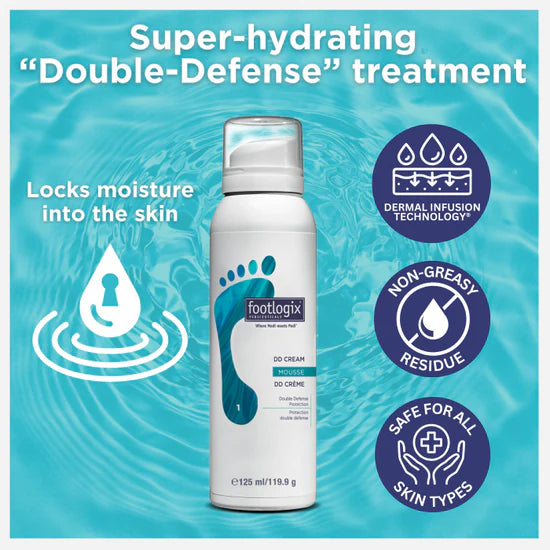
It's absorbed quickly and doesn't leave a greasy residue, which matters for a foot product that needs to be used consistently to work. It's suitable for use after a foot soak or pedicure, or as part of a morning and evening foot care routine.

For a broader look at products suitable for peeling and rough skin, see the peeling skin treatment collection and the rough skin on feet range.

How to Prevent Peeling Skin on Feet

For dry skin-related peeling, which is the most common type, a consistent routine matters more than any single product:

1.    Moisturise daily. Apply a foot cream after washing while skin is slightly warm — it absorbs more readily.

2.    Dry thoroughly between toes after bathing. Retained moisture creates ideal conditions for fungal growth.

3.    Wear moisture-wicking socks. Natural fibres or technical fabrics reduce the build-up of sweat and heat.

4.    Rotate footwear. Shoes need 24 hours to dry out fully between uses.

5.    Use antifungal powder or spray in shoes if you're prone to athlete's foot.

6.    Apply SPF to the tops of your feet in summer if they'll be exposed to sun.

7.    Use footwear in communal wet areas (pools, changing rooms) to avoid picking up fungal infections.


When to See a GP or Podiatrist

Most peeling skin on feet resolves with appropriate at-home treatment. See a GP or podiatrist if:

      Peeling is severe, painful, or affecting your ability to walk

      There's significant cracking or open skin that shows signs of infection (warmth, pus, increasing redness)

      An over-the-counter antifungal hasn't resolved the problem after four weeks

      You have diabetes or circulatory problems — foot conditions can escalate quickly and warrant professional assessment

      The peeling is accompanied by systemic symptoms like fever

      You suspect psoriasis or eczema and have had no diagnosis

The Bottom Line

Peeling skin on feet is almost always treatable, but the treatment needs to match the cause. Dry skin responds to urea-based moisturisers. Athlete's foot needs antifungal treatment. Contact dermatitis needs trigger removal. Sunburn needs time and gentle care.

If the peeling is driven by dry or thickened skin, the Footlogix Peeling Skin Formula is the most direct solution — formulated specifically for this presentation and built to address both the symptom an

← Older Post